
News Network Report (Correspondent: Yang Xiaoyu) On May 14, the School of Foreign Languages and Foreign Trade and the International School of Wuhan Technical University organized 24 international students from 12 countries including Russia, Kazakhstan and Cambodia for a cultural‑experience activity at Hubei Provincial Museum. The event helped international students practise Chinese in real‑life contexts and gain insights into Chinese culture.
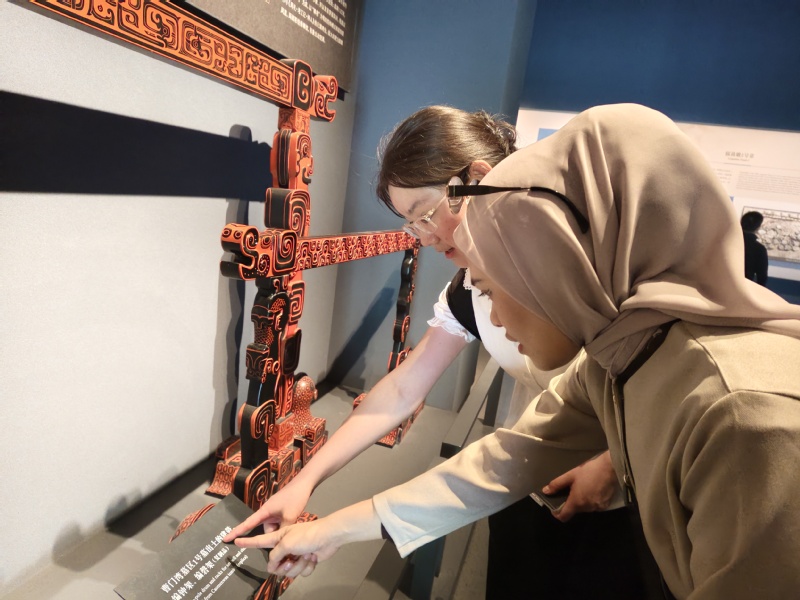
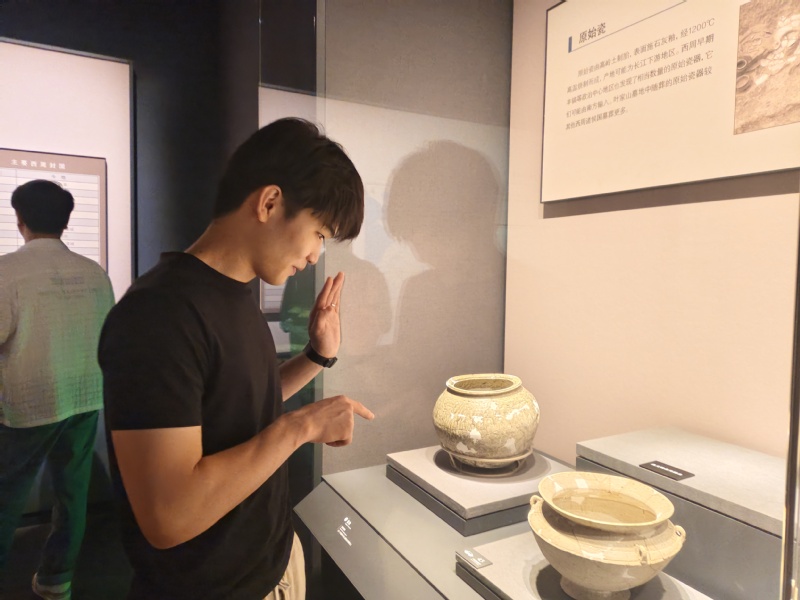

Accompanied by faculty members and student volunteers, the international students visited core exhibition halls one after another: the Marquis Yi of Zeng Gallery, The Sword of Goujian, King of Yue: A Special Exhibition, Chu: A Polity of 800 Years, and Fit for a Prince: Treasures of Prince Zhuang of Liang. They got an up‑close view of the museum’s signature treasures, including the Chime‑bells of Marquis Yi of Zeng, the Sword of Goujian King of Yue, the Bronze Zun‑Pan of Marquis Yi of Zeng, and the Drum with Phoenix Rack on Tiger‑shaped Pedestal.
During the visit, volunteers from the International Exchange Association delivered Chinese‑English bilingual explanations of the craftsmanship and historical background of the cultural relics. Rier, an international student from Indonesia, took the initiative to inquire about rare Chinese characters on exhibition boards and learned their pronunciations and meanings on the spot. She described the activity as a “second classroom”, which enlarged her Chinese‑character vocabulary and deepened her understanding of cultural relics.
In the Chu: A Polity of 800 Years gallery, Sadaf, an international student from Bangladesh, paused to read the chronological timeline of major events of the State of Chu. He commented that Chu culture is highly imaginative and ancient Chinese artifacts are breathtaking.
After the nearly two‑hour tour, the international students communicated with vendors at cultural‑and‑creative souvenir stalls at the museum exit in Chinese, making price inquiries and purchasing souvenirs. They put the language knowledge acquired in class into practical use.
On their way back, many international students said they would share their visit experiences and photos of cultural relics with relatives and friends overseas. According to the teachers in charge, such cultural‑experience events are designed for international students to practise Chinese in authentic scenarios and deepen their understanding of China through cultural immersion.
Reviewed by: Gui Yi Editor‑in‑charge: Jiang Yuanyuan
